How to Choose the Best Umbrella

The best umbrella isn’t necessarily the most expensive. It’s the one that suits how and where you’ll use it.
An umbrella carried every day on the commute has very different requirements from one kept by the front door for walking the dog, or from a large umbrella used on the golf course or on a long stroll in the countryside.
Before choosing an umbrella, consider a few practical points.
1. Folding or full-length?
This is probably the best place to start.
Folding umbrellas, sometimes known as compact or travel umbrellas, collapse for easy carrying in a handbag, backpack, briefcase, or even a coat pocket. They’re ideal if you want an umbrella with you without having to carry it all day, and it’s highly likely you’ll have it to hand if there’s a sudden downpour.
Expect a good-quality compact auto-open-and-close umbrella to cost around £15. This green and white polka-dot design is a good example:
Green and White Polka Dot Auto Open and Close Umbrella

- Automatic Open & Close
- Wind Resistant Fibreglass Frame
- High Quality Pongee Fabric
- Soft Rubber Handle
- Canopy Diameter: 102cm
- Stowaway Size: 27cm
Featured umbrella: £14.99
Full length Walking/Golf Umbrellas
Walking umbrellas have a full-length shaft and don’t fold down. They’re less portable, but can offer a larger canopy, a substantial handle and a simpler frame.
Unisex Black Walking Umbrella

- Automatic Open
- Lightweight Frame
- Safety Runner & Tips
- Stowaway Size: 98cm
Featured umbrella: £14.99
Golf umbrellas are large, full-length umbrellas designed to provide greater coverage and protection from rain and wind. Originally designed for golfers and exposed golf courses, their generous canopy and robust frame also make them popular for everyday use, sporting events, outdoor work and anyone wanting more protection than a standard walking or compact umbrella.
Plentiful in range, colour and price, golf umbrellas tend to be within £10-£20
Wind Resistant Fibrelight Large Golf Umbrella

- Push and slide button to open
- Easy Grip Handle
- Fibreglass Umbrella Frame
- Wind Resistant golf umbrella
- Canopy when fully open: 130cm
Featured umbrella: £9.99
So, it depends on whether portability, size, or coverage matters most to you. Don’t assume a larger umbrella is automatically stronger. Wind resistance depends more on the frame materials, ribs and overall construction than canopy size alone. For comparison, current products on the market range from compact umbrellas around 20–25 cm long when closed to walking umbrellas approaching one metre in length.
2. Check the canopy size
Don’t judge an umbrella purely by how large it looks when folded. The open canopy diameter tells you much more about the coverage you’ll actually get. Compact umbrellas are often around 90–105cm across, walking umbrellas around 100–120cm, while larger golf umbrellas can reach 130–150cm or more.
A small folding umbrella can be perfect for one person travelling light, whereas a larger walking or golf umbrella provides considerably more protection if coverage is the priority.

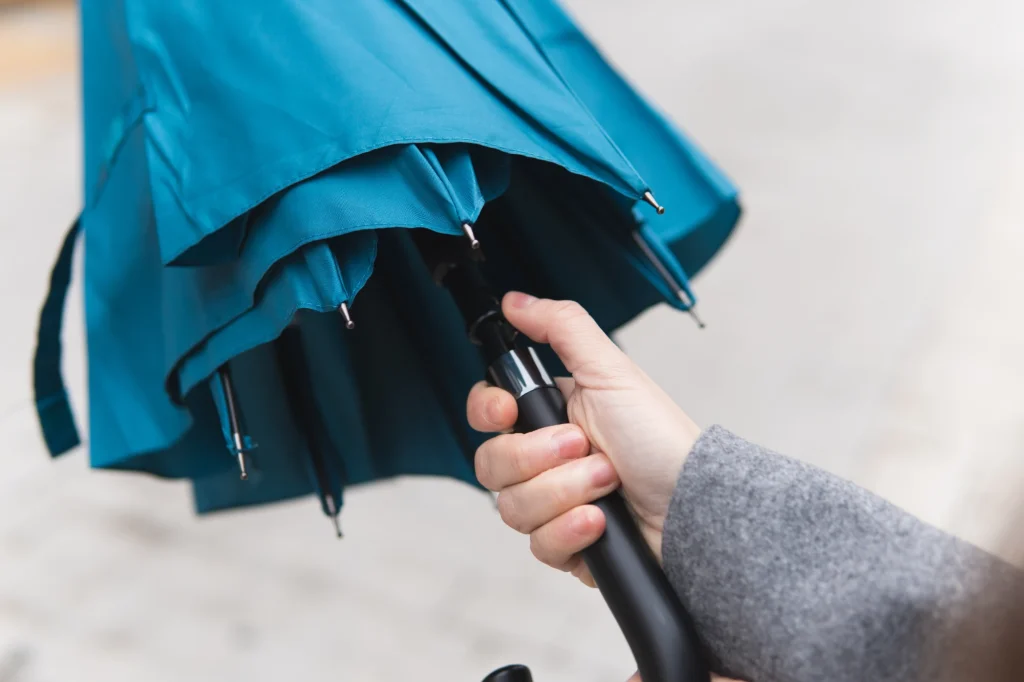
3. Look at the frame and ribs
A good umbrella isn’t just about the fabric.
Pay attention to the construction beneath the canopy. Materials such as fibreglass and fibre-reinforced components are commonly used in higher-performance umbrellas (https://xbrella.co.uk/product/premium-wind-resistant-fibreauto-golf-umbrella-3477p/) because they provide strength while retaining some flexibility.
That flexibility can be important in windy weather. Some wind-resistant umbrellas are specifically designed to flex or even invert under pressure rather than placing excessive force on the ribs.
4. Think carefully about wind resistance
If you’ve ever lost an umbrella to a sudden gust, or damaged the frame from it turning inside out… wind resistance is probably high on your list.
Look beyond the word “windproof” and check what the manufacturer actually says about the construction. Features may include flexible ribs, reinforced materials, vented canopies or frames designed to recover from inversion.
However, no umbrella should be considered indestructible. Even manufacturers of wind-resistant umbrellas warn that strong gusts can damage them.

Quick tip
If you’re buying an umbrella primarily for commuting, prioritise compact folded size and wind resistance over maximum canopy width.

5. Don’t overlook weight
There’s always a compromise between size, strength and portability.
If you’re carrying an umbrella around London all day, an extra few hundred grams can make a noticeable difference. If it stays in the car or by the front door, weight may barely matter.
6. Manual or automatic?
This largely comes down to convenience. A manual umbrella is opened and closed by hand, offering a straightforward mechanism, and is usually slightly cheaper. An automatic umbrella opens at the press of a button, and some models offer automatic opening and closing. This can be particularly useful when you’re getting out of a car, leaving a building, or carrying shopping.

The best umbrella isn’t necessarily the most expensive. It’s the one that suits how and where you’ll use it.
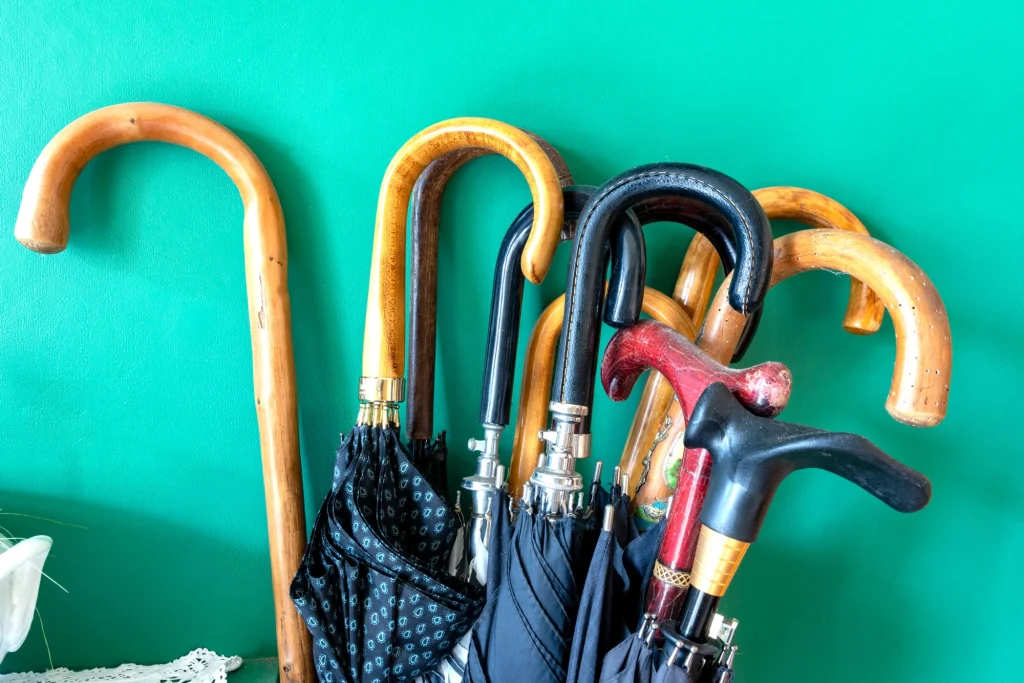
7. Consider the handle
It may sound like a small detail, but the handle is the part of the umbrella you’ll actually hold. Traditional walking umbrellas often feature a J-shaped crook handle, while contemporary designs may use rubberised or ergonomically shaped grips. If you’ll regularly use the umbrella for longer walks, comfort is worth considering.
8. Choose for how you’ll actually use it
Ultimately, there’s no single “best umbrella” for everyone.
- For commuting: choose a lightweight folding umbrella that fits easily into your everyday bag.
- For walking: consider a full-length walking umbrella with a comfortable handle and good canopy coverage.
- For windy conditions: look for a flexible or reinforced frame designed specifically for wind resistance.
- For maximum coverage: consider a large walking or golf-style umbrella.
- For occasional use: a simple, lightweight folding umbrella may be all you need.

The best umbrella is the one that suits your occasion.
FAQ
Look for reinforced ribs and a vented or flexible canopy.
A compact folding umbrella is generally easiest to carry daily.
It depends on how often you’ll use it, but spending a little more can be worthwhile for stronger frames, better wind resistance and a longer lifespan.
Here’s a practical guide to the key umbrella functions and terms you might come across:
| Group | Feature | Description |
|---|---|---|
| Opening & Closing | Automatic Open | Opens automatically at the press of a button. |
| Automatic Open & Close | Button opens and collapses the canopy automatically. | |
| Manual Open | Opens manually by sliding the runner upwards. | |
| Safety Runner | Helps prevent fingers being pinched during opening and closing. | |
| Frame & Strength | Fibreglass Frame | Strong, lightweight and flexible frame material. |
| Lightweight Frame | Reduces weight for easier everyday carrying. | |
| Wind Resistant | Designed to flex and withstand stronger gusts. | |
| Number of Ribs | Structural arms supporting and shaping the canopy. | |
| Canopy | Pongee Fabric | Lightweight, durable, tightly woven water-resistant canopy fabric. |
| Canopy Diameter | Width of the umbrella when fully open. | |
| Vented Canopy | Allows wind through to reduce pressure on the frame. | |
| Safety Tips | Covered rib ends designed for safer everyday use. | |
| Handles | Crook Handle | Curved traditional handle, easy to hold or hook. |
| Straight Handle | Simple compact grip common on folding umbrellas. | |
| Soft Rubber Handle | Comfortable, secure grip, particularly in wet conditions. | |
| Size & Portability | Stowaway Size | Length of the umbrella when completely folded. |
| Telescopic Shaft | Collapsible shaft allowing the umbrella to pack down smaller. |
Explore X-Brella’s range of umbrellas and find the size, style and design that’s right for you.